
Alex residents warned to guard against listeria
ALEXANDRA — The Johannesburg health district says nobody has been treated for listeria during the recent outbreak of the disease.

Alex Clinic has not treated anyone for listeria since the outbreak of the foodborne disease recently, the provincial department of health said.
Sandile Gwayi, the media liaison officer for the Gauteng Health Department, said according to clinic records no patients were treated for symptoms of the disease at the clinic.
Read: CITY NEWS: We get up-close and personal with Listeria
He said residents should be aware of symptoms like fever, vomiting and diarrhoea and take good care of themselves to prevent contracting the disease.
Anyone with listeria symptoms should visit the clinic or their doctor as soon as possible.
Gwayi advised residents to practice good hand hygiene, handle food appropriately and cook meat at a very high temperature (40°) before they eat it.
Read: IN PICTURES: City leads listeriosis awareness campaign
The department said of the 366 patients diagnosed with listeria in Gauteng last month, 38 died from the disease.
An outbreak response team treated the cases, and an action plan was adopted to prevent listeria and promote good hygiene in the city.
If one notices listeria-like symptoms, Gwayi said a mixture of one litre of boiled water, eight teaspoons of sugar and a pinch of salt taken after a visit to the toilet or vomiting would help replace lost fluids in the body.
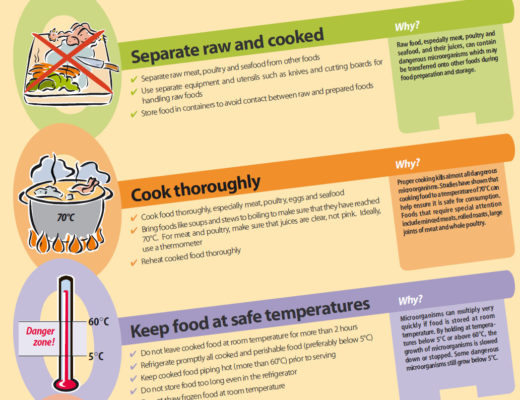
The following are five keys to keep your food safe from listeria
- Keep hands and food surfaces clean
- Wash your hands before handling food and also during food preparation
- Wash your hands after going to the toilet
- Wash and sanitise all surfaces and equipment used for food preparation
- Protect kitchen areas and food from insects, pests and other animals
Separate raw and cooked food
- Separate raw meat, poultry and seafood from other foods
- Use separate equipment and utensils such as knives and cutting boards for handling raw foods
- Store food in containers to avoid contact between raw and prepared foods
Cook thoroughly
- Cook food thoroughly, especially meat, poultry, eggs and seafood
- Bring foods like soups and stews to boiling point to make sure that they have reached 70°C. Check that meat and poultry juices are clear, not pink. Ideally, use a thermometer
- Reheat cooked food thoroughly
Keep food at safe temperatures
- Do not leave cooked food at room temperature for more than 2 hours
- Refrigerate all cooked and perishable food promptly (preferably below 5 °C)
- Keep cooked food piping hot (more than 60°C) prior to serving
- Do not store food too long, even in the refrigerator
- Do not thaw frozen food at room temperature
Use safe water and raw materials
- Use safe water or treat it to make it safe
- Select fresh and wholesome foods
- Choose foods processed for safety, such as pasteurised milk
- Wash fruits and vegetables, especially if eaten raw
- Do not use food beyond its expiry date
